
Northwest becoming more quake-ready
Posted using ShareThis
Tuesday, January 19, 2010


FEMA Encourages Volunteerism Through Citizen Corps
WASHINGTON, D.C. -- On January 18, Americans will volunteer in a Day of Service to honor Martin Luther King, Jr., transforming the federal holiday into a national day of volunteerism where people of all ages and backgrounds can come together to strengthen their community.
The Federal Emergency Management Agency (FEMA) encourages volunteerism and civic engagement for all-hazards emergency preparedness and resilience through its Citizen Corps program. This year, Citizen Corps Councils across the country have organized Day of Service volunteer preparedness activities such as assembling emergency preparedness kits to be delivered to the homebound, replenishing supplies at local food pantries, conducting health fairs with influenza prevention outreach and hosting emergency preparedness education classes.
FEMA’s Citizen Corps is the grassroots community preparedness and resilience movement that asks everyone in America to be an active participant in making themselves and their communities safer, stronger and better prepared to handle any emergency situation. Over 2,400 local communities nationwide have created Citizen Corps Councils to strengthen collaboration between government and civic leaders and to educate, train and involve the public in all-hazards emergency preparedness.
For more information about FEMA and Citizen Corps, visit http://links.govdelivery.com/track?type=click&enid=bWFpbGluZ2lkPTY5MjUwMCZtZXNzYWdlaWQ9UFJELUJVTC02OTI1MDAmZGF0YWJhc2VpZD0xMDAxJnNlcmlhbD0xMjE1NjUzOTE2JmVtYWlsaWQ9amJhaWxleUBvZW0uc3RhdGUub3IudXMmdXNlcmlkPWpiYWlsZXlAb2VtLnN0YXRlLm9yLnVzJmV4dHJhPSYmJg==&&&100&&&http://www.fema.gov/ and http://links.govdelivery.com/track?type=click&enid=bWFpbGluZ2lkPTY5MjUwMCZtZXNzYWdlaWQ9UFJELUJVTC02OTI1MDAmZGF0YWJhc2VpZD0xMDAxJnNlcmlhbD0xMjE1NjUzOTE2JmVtYWlsaWQ9amJhaWxleUBvZW0uc3RhdGUub3IudXMmdXNlcmlkPWpiYWlsZXlAb2VtLnN0YXRlLm9yLnVzJmV4dHJhPSYmJg==&&&101&&&http://www.citizencorps.gov/.
FEMA’s mission is to support our citizens and first responders to ensure that as a nation we work together to build, sustain, and improve our capability to prepare for, protect against, respond to, recover from, and mitigate all hazards.
The Federal Emergency Management Agency (FEMA) encourages volunteerism and civic engagement for all-hazards emergency preparedness and resilience through its Citizen Corps program. This year, Citizen Corps Councils across the country have organized Day of Service volunteer preparedness activities such as assembling emergency preparedness kits to be delivered to the homebound, replenishing supplies at local food pantries, conducting health fairs with influenza prevention outreach and hosting emergency preparedness education classes.
FEMA’s Citizen Corps is the grassroots community preparedness and resilience movement that asks everyone in America to be an active participant in making themselves and their communities safer, stronger and better prepared to handle any emergency situation. Over 2,400 local communities nationwide have created Citizen Corps Councils to strengthen collaboration between government and civic leaders and to educate, train and involve the public in all-hazards emergency preparedness.
For more information about FEMA and Citizen Corps, visit http://links.govdelivery.com/track?type=click&enid=bWFpbGluZ2lkPTY5MjUwMCZtZXNzYWdlaWQ9UFJELUJVTC02OTI1MDAmZGF0YWJhc2VpZD0xMDAxJnNlcmlhbD0xMjE1NjUzOTE2JmVtYWlsaWQ9amJhaWxleUBvZW0uc3RhdGUub3IudXMmdXNlcmlkPWpiYWlsZXlAb2VtLnN0YXRlLm9yLnVzJmV4dHJhPSYmJg==&&&100&&&http://www.fema.gov/ and http://links.govdelivery.com/track?type=click&enid=bWFpbGluZ2lkPTY5MjUwMCZtZXNzYWdlaWQ9UFJELUJVTC02OTI1MDAmZGF0YWJhc2VpZD0xMDAxJnNlcmlhbD0xMjE1NjUzOTE2JmVtYWlsaWQ9amJhaWxleUBvZW0uc3RhdGUub3IudXMmdXNlcmlkPWpiYWlsZXlAb2VtLnN0YXRlLm9yLnVzJmV4dHJhPSYmJg==&&&101&&&http://www.citizencorps.gov/.
FEMA’s mission is to support our citizens and first responders to ensure that as a nation we work together to build, sustain, and improve our capability to prepare for, protect against, respond to, recover from, and mitigate all hazards.
Saturday, January 16, 2010
Storm System to Hit North California and South Oregon
A series of winter storms are expected to batter California starting Sunday, and local forecasters say there likely will be significant amounts of rain and gusty winds in Southern Oregon and the Siskiyou Mountains, too.
National Weather Service forecasters in Medford said the weather system is expected to bring inches of rain and feet of snow to much of California, and it's large enough to reach at least as far north as the Siskiyous. Snow levels should be low enough to bring generous amounts of new snow to Mount Ashland and especially Mount Shasta.
A weather service advisory issued Friday in Sacramento spoke of "virtually a storm a day" from Sunday through next Friday, which could bring as much as 10 feet of snow in higher elevations of the Sierras by the end of next week.
The wet weather is expected to persist in the Siskiyous at least through Thursday, meteorologist Brett Lutz said.
You can read the whole article at http://m.mailtribune.com/apps/pbcs.dll/article?AID=/20100116/NEWS/1160307&template=wapart
Friday, January 15, 2010
South, Northwest face storms
Friday, January 15, 2010
Storm clouds were expected to gather in the northern Gulf of Mexico today as low pressure began to develop off the coast of Texas.Low pressue was forecast to strengthen throughout the day, producing rain along the coast from Texas to the Florida Panhandle. Gusty winds could develop in the same region. The storm was forecast to move eastward overnight and begin a trek up the East Coast. It was expected to move into the ocean over the weekend.
A second storm was forecast today in the Northwest. A Pacific low pressue system was expected to move into the region near the Olympic Peninsula and bring heavy rain as it moved inland. The storm is anticipated to affect coastal Washington and bring heavy snowfall to the coastal mountain ranges. Rain was expected to spread into Oregon by midday.
Elsewhere, precipitation chances were relatively small. High pressure centered over the Great Basin was forecast to keep skies generally clear through the Rockies. While the western High Plains were expected to see partially overcast skies, no rain or snow was expected.Some cloud cover was expected in the Northeast, especially near the Great Lakes. With the exception of a few mountain snow flurries in New England, precipitation wasn't expected.
On Thursday, temperatures in the Lower 48 states ranged from a low of negative 13 degrees at Berlin, N.H., to a high of 78 degrees at Lake Forest, Calif.
Storm clouds were expected to gather in the northern Gulf of Mexico today as low pressure began to develop off the coast of Texas.Low pressue was forecast to strengthen throughout the day, producing rain along the coast from Texas to the Florida Panhandle. Gusty winds could develop in the same region. The storm was forecast to move eastward overnight and begin a trek up the East Coast. It was expected to move into the ocean over the weekend.
A second storm was forecast today in the Northwest. A Pacific low pressue system was expected to move into the region near the Olympic Peninsula and bring heavy rain as it moved inland. The storm is anticipated to affect coastal Washington and bring heavy snowfall to the coastal mountain ranges. Rain was expected to spread into Oregon by midday.
Elsewhere, precipitation chances were relatively small. High pressure centered over the Great Basin was forecast to keep skies generally clear through the Rockies. While the western High Plains were expected to see partially overcast skies, no rain or snow was expected.Some cloud cover was expected in the Northeast, especially near the Great Lakes. With the exception of a few mountain snow flurries in New England, precipitation wasn't expected.
On Thursday, temperatures in the Lower 48 states ranged from a low of negative 13 degrees at Berlin, N.H., to a high of 78 degrees at Lake Forest, Calif.
Wednesday, January 13, 2010
International Response Fund
You can help the victims of countless crises, like the recent earthquake in Haiti, around the world each year by making a financial gift to the American Red Cross International Response Fund, which will provide immediate relief and long-term support through supplies, technical assistance and other support to help those in need. The American Red Cross honors donor intent. If you wish to designate your donation to a specific disaster, please do so at the time of your donation by mailing your donation with the designation to the American Red Cross, P.O. Box 37243, Washington, D.C. 20013 or to your local American Red Cross chapter. Donations to the International Response Fund can be made by phone at 1-800-REDCROSS or 1-800-257-7575 (Spanish) or online at www.redcross.org.
Information from: Althea Turner Geologic Hazards Program CoordinatorOregon Emergency
Oregon lies at a convergent continental boundary where two tectonic plates are colliding. There are over 1000 earthquakes over magnitude 1.0 in Washington and Oregon every year, with at least two dozen being large enough to be felt. Approximately 17 people have lost their lives due to earthquakes in the Pacific Northwest. Since 1872, there have been 20 damaging earthquakes in Washington and Oregon[1]. The Pacific coast poses special risk from tsunamis associated with a Cascadia Subduction Zone earthquake. In addition to Subduction zone earthquakes, Oregon is also susceptible to crustal earthquakes. The two largest earthquakes in recent years in Oregon, Scotts Mills, (magnitude 5.6) and the Klamath Falls, main shocks (magnitude 5.9 and magnitude 6.0) of 1993 were crustal earthquakes[2].
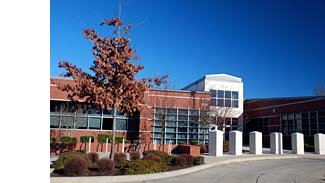
In recognition of this seismic risk, Oregon has taken measures to mitigate and prepare for the inevitable destructive earthquakes and tsunami. In the 1990s, Oregon began to revise the Uniform Building Code to reflect the recent research showing the higher risks from earthquakes[3]. Many schools, public buildings and critical infrastructure were built previous to the newer, more stringent codes, and are susceptible to failure in a seismic event. According to a 2007 Oregon Department of Geology and Mineral Industries (DOGAMI) report, over 1000 schools and 200 emergency facilities are at a high or very high risk of “probability that the building will collapse if ground motions occur that are equal to or exceed the maximum considered earthquake at that location.”[4]
[1] http://www.pnsn.org/INFO_GENERAL/faq.html. Retrieved June 24, 2009
[2] http://www.oregon.gov/DOGAMI/earthquakes/EQs.shtml. Retrieved June 24, 2009
[3] http://quake.usgs.gov/prepare/factsheets/PacNW/. Retrieved June 24, 2009
[4] DOGAMI Open-File Report O-07-02. p. iv.
In recognition of this seismic risk, Oregon has taken measures to mitigate and prepare for the inevitable destructive earthquakes and tsunami. In the 1990s, Oregon began to revise the Uniform Building Code to reflect the recent research showing the higher risks from earthquakes[3]. Many schools, public buildings and critical infrastructure were built previous to the newer, more stringent codes, and are susceptible to failure in a seismic event. According to a 2007 Oregon Department of Geology and Mineral Industries (DOGAMI) report, over 1000 schools and 200 emergency facilities are at a high or very high risk of “probability that the building will collapse if ground motions occur that are equal to or exceed the maximum considered earthquake at that location.”[4]
[1] http://www.pnsn.org/INFO_GENERAL/faq.html. Retrieved June 24, 2009
[2] http://www.oregon.gov/DOGAMI/earthquakes/EQs.shtml. Retrieved June 24, 2009
[3] http://quake.usgs.gov/prepare/factsheets/PacNW/. Retrieved June 24, 2009
[4] DOGAMI Open-File Report O-07-02. p. iv.
Subscribe to:
Posts (Atom)



 Posts
Posts

